craft — prompt anatomy
Half of these prompts are under 40 characters
The internet says write long, detailed prompts. This collection says the opposite, and the reason is that description is only one of the two things a prompt is made of.
Search for advice on Midjourney prompting and you will be told to be specific: name the lens, the lighting, the mood, the artist, the film stock. Prompt "formulas" circulate with six or seven slots to fill in. The implied claim is that length is quality.
Every image in this collection stores its description and its parameters as separate fields, so the claim is testable. It does not survive.
- 45of 85 prompts are 40 characters or less
- 4characters in the shortest — the word “lily”
- 1,228characters in the longest
- 3parameters on a typical image
| Description length | Images | Share |
|---|---|---|
| 0 characters | 1 | the style reference is the whole prompt |
| 1–40 characters | 45 | a noun phrase |
| 41–120 characters | 19 | a sentence |
| Over 120 characters | 20 | a paragraph |
A prompt has two halves
The reason short prompts work here is that description is only half of what is being said. The other half is the parameter tail, and it is carrying most of the styling load — an average of three parameters per image.
Take the shortest prompts in the collection. The description is a single word:
lily --sref 739305302
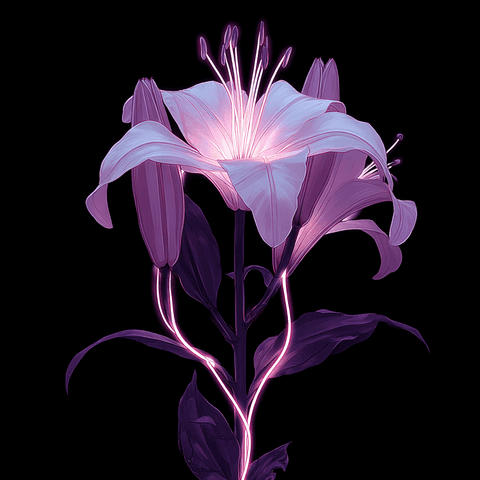

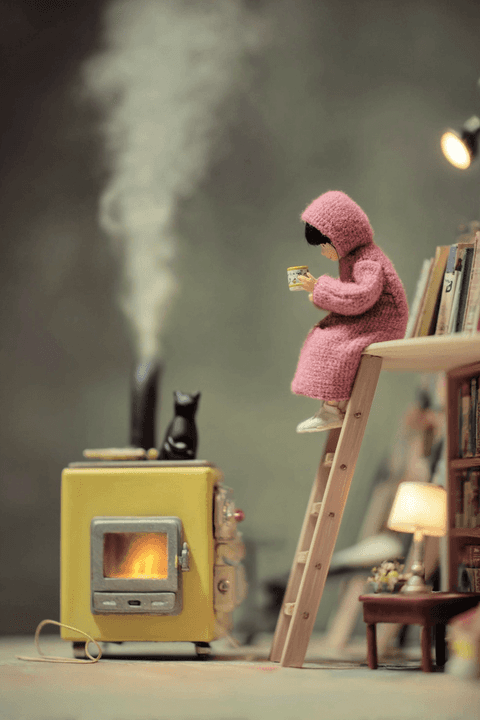
Three images whose entire description is one word — “lily”, “lily” and “cozy”. Everything else you can see was decided by the parameters.
lily names the subject. The style code decides what kind of picture a lily becomes. Adding "ethereal, glowing, dreamlike, 8k, hyperdetailed" to that prompt would not add information — it would compete with the reference that is already specifying the look, and the two would average into something blander than either.
When length is right
The longest prompt here runs 1,228 characters, and it earns them. It is a commercial product shot — a case where nothing can be left to the model, because the brief is exact:
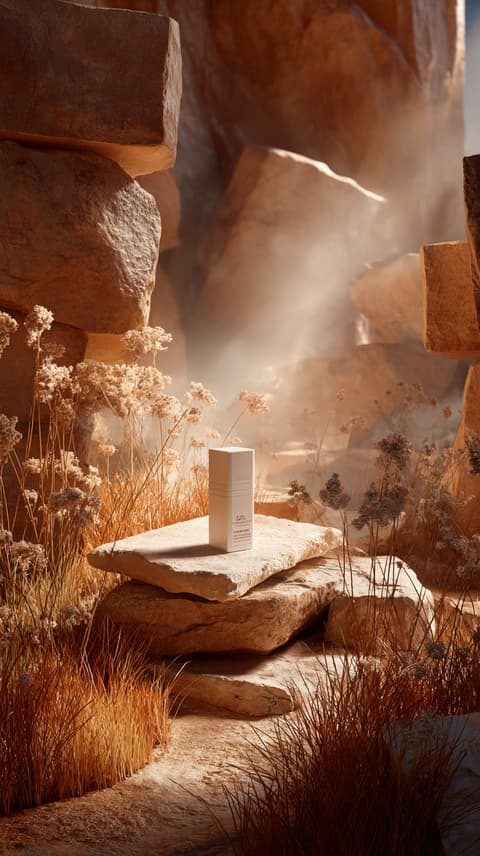
An editorial, cinematic, and dramatically lit product scene set in a windswept terracotta desert canyon. skin care product in on the middle of the scene, Place the product prominently on a sun-baked sandstone rock slab in the foreground. near this skincare product, there are grass and flowers looks like very watery In the background, create a glowing, atmospheric haze with gusts of wind blowing fine sand, swirling dramatically through the canyon. Add unusual, gravity-defying balanced rocks, sculptural and monolithic, highlighted by a strong directional rim light that enhances texture and adds a sense of surreal editorial drama. Integrate additional brutalist elements: fine cubes and rectangular blocks of raw white limestone, arranged as an abstract interpretation of a brushed-steel faucet and minimalist sink, clean geometric forms contrasting with the organic terrain. Lighting should be rich, warm, and cinematic, with deep shadows and a glowing amber backlight diffusing through the dust. Shoot the scene as if captured on a medium format camera, using a medium-long lens, in a 9:16 vertical aspect ratio. Hyper-realistic, high-end luxury texture quality. Mood: dramatic, sculptural, atmospheric, editorial luxury. --ar 9:16 --raw
Notice what the length is spent on. Not adjectives stacked for emphasis — specifics that change the picture: what the object is, where it sits, how it is lit, what the background does. Every clause is doing work that no parameter could do for it.
That is the test for a long prompt. Read each clause and ask whether removing it would change the image. "Cinematic, dramatic, editorial" is usually three words for one instruction. "Set in a windswept terracotta landscape" is a place that did not exist before you wrote it.
The prompt with no description at all
One image here has an empty description. Its complete prompt is:
--ar 4:5 --v 7 --sref 2405529014No subject, no adjectives, nothing. A style code, a version and a frame. And it produces a finished image — because a style reference is not only a treatment, it has content of its own, and with nothing to steer it the reference is what you get.
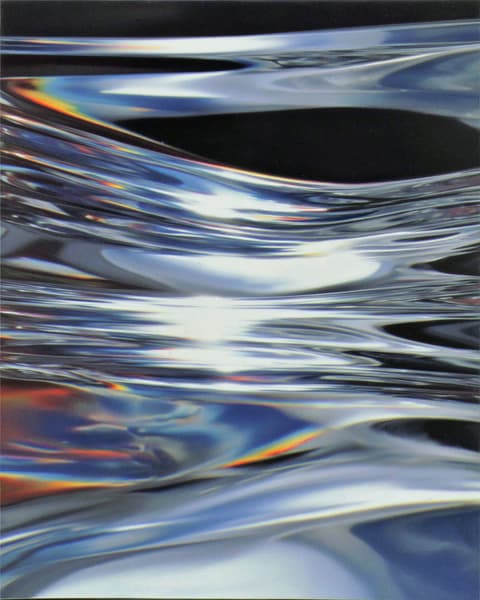
This is a useful thing to try deliberately. Running a style code bare, with no description, shows you what the code actually is before you start fighting it. Then you add the subject.
Different subjects want different lengths
Length is not a personal style choice — it tracks what is being made. Averaged by category across this collection:
| Category | Images | Average description |
|---|---|---|
| Photorealistic | 18 | 170 characters |
| Concept Art | 47 | 96 characters |
| Reference | 8 | 83 characters |
| Architecture | 9 | 45 characters |
| Texture | 3 | 35 characters |
Photorealistic work needs the most words because photographs are specific: this object, this light, this room. Architecture needs the fewest because a building is legible from a short phrase and the frame does the rest — a pattern that shows up in the aspect-ratio guide too, where seven of the nine architecture images share one wide frame.
How to shorten a prompt that is not working
- Delete every quality word. "8k", "masterpiece", "highly detailed", "award-winning" — these are not instructions, and the model does not have a low-quality mode you are opting out of.
- Delete anything your style reference already covers. If you are carrying a
--sref, the words about mood, palette and finish are competing with it. - Keep every clause that names something. A subject, a place, an action, a relationship between objects.
- Move look into parameters. Framing goes to
--ar, model opinion to--stylize, treatment to--sref.
Every prompt quoted here is on its own page, in full, with its parameters — including the four-character ones. Browse the collection and sort your own conclusions out from the actual evidence.